 Birds Galaxy
Quick facts
| Common species | Peach-faced (Rosy-faced), Fischer's, Masked |
|---|---|
| Size | 14 – 15 cm |
| Weight | 40 – 58 g |
| Lifespan | 10 – 15 years |
| Comes from | Africa (Namibia and Angola for Peach-faced; Tanzania for Fischer's and Masked) |
| Eggs per clutch | Usually 4 – 6 |
| Incubation | About 23 days |
About lovebirds
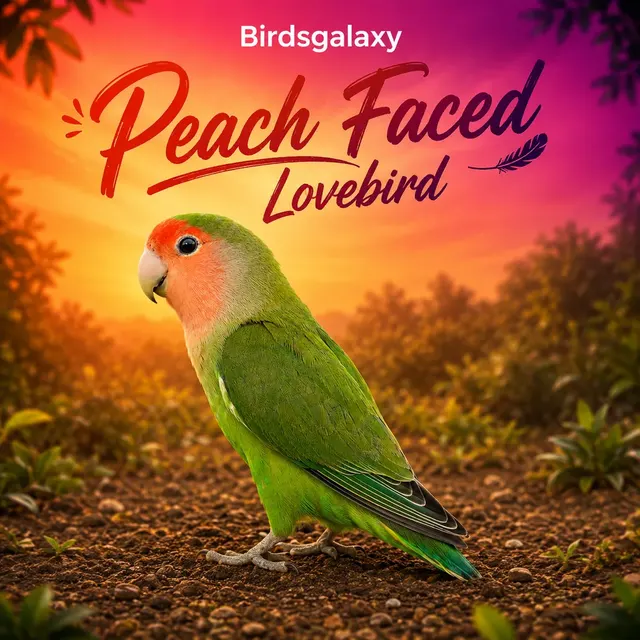
Lovebirds are small parrots from Africa. The Peach-faced lovebird (also called Rosy-faced) is the most popular as a pet: a green bird with a pink-peach face and a blue rump, and the easiest lovebird to breed. Fischer's lovebirds have an orange face fading to yellow, and Masked lovebirds have a dark head with a yellow collar.
They are clever, active and very sociable. A single lovebird can bond closely with its owner if it gets plenty of daily attention; a pair will keep each other company but is usually less hand-tame. Lovebirds can be territorial, so introduce new birds slowly and in neutral space.
Cage and setup
Lovebirds are busy fliers, so width matters more than height. For a pair, choose the largest cage you can, at least about 80 cm long, with bar spacing of around 1 – 1.3 cm so heads can't get stuck.
- Perches of different thicknesses, preferably natural wood, instead of only smooth dowels.
- Chewable toys (wood, cardboard, palm leaf). Lovebirds love to shred, and this keeps beaks healthy.
- Separate bowls for food and water, cleaned every day.
- A spot away from draughts, direct hot sun and the kitchen.
- Time out of the cage every day in a safe, bird-proofed room.
What lovebirds eat
A good diet is a base of quality pellets or a parrot / lovebird seed mix, plus fresh food every day: leafy greens, carrot, broccoli, peppers, peas and corn, sprouted seeds, and small amounts of fruit such as apple (without pips), pear or berries. Seed-only diets are too fatty and low in vitamins.
Give a cuttlebone or mineral block for calcium, especially for hens that lay eggs. Fresh, clean water every day.
Never give avocado, chocolate, caffeine (tea, coffee, cola), alcohol, salty or fried food, onion or garlic. Fruit seeds and pits (apple pips, cherry and peach stones) should be removed. Fumes from non-stick (PTFE / Teflon) pans and aerosol sprays can kill a bird in minutes, so keep birds well away from the kitchen.
Daily care and health
Change water and fresh food daily, clean the cage floor every few days and give the whole cage a proper wash weekly. Most lovebirds enjoy a shallow bath or a light mist of water. Nails and beaks normally wear down on perches and toys; if they grow too long, ask an avian vet.
Birds hide illness until they are quite unwell, so small changes matter. See an avian vet (a vet who treats birds) quickly if your bird:
- sits fluffed up for long periods, or sleeps much more than usual,
- stops eating, or loses weight (a kitchen scale in grams helps you notice),
- has a bobbing tail when breathing, clicks or wheezes,
- has droppings that change colour or become very watery for more than a day,
- has discharge from the eyes or nostrils, or sits on the cage floor.
Breeding lovebirds
Only breed healthy, adult birds, ideally at least about a year old, and have a plan for the chicks before you start. Lovebirds breed well in a nest box (roughly 20 × 20 × 25 cm) with nesting material: fresh twigs, palm leaf or paper strips. Peach-faced hens famously carry strips of material tucked into their rump feathers.
- A hen usually lays 4 – 6 eggs, one every other day.
- Eggs hatch after about 23 days.
- Chicks open their eyes at about 10 days and leave the nest at around 5 – 6 weeks, then keep being fed by the parents for a couple of weeks more.
- Give the pair extra soft food and calcium while they are laying and feeding chicks, and limit them to two or three clutches a year so the hen can recover.
The free Birds Galaxy app tracks your pairs, clutches, egg check dates and pedigrees, and reminds you when to check eggs.
Colours and genetics
Lovebirds come in many colour mutations: Blue, Turquoise, Aqua, Dark Factor (D and DD), Violet, Opaline, Ino (Lutino and Albino), Dilute, Pale Fallow, Dun Fallow, Euwing and more. Some are recessive and can be carried hidden ("split"), Dark Factor and Violet show with one copy, and Opaline is sex-linked, so sons and daughters inherit it differently.
Use our free Lovebird Genetic Calculator to see every chick colour a pair can produce, with percentages for sons and daughters.
Buying and the law
Buy captive-bred birds from breeders you can visit, and never buy wild-caught birds. Peach-faced lovebirds are not covered by CITES, but Fischer's and Masked lovebirds are on CITES Appendix II, so moving them between countries needs permits. Rules differ by country, so check your local law before buying, selling or moving birds.
Track your birds, clutches and pedigrees, ask the Bird Care Assistant, and work out chick colours, all in the free Birds Galaxy app.
Get the appFrequently asked questions
Do lovebirds have to be kept in pairs?
No. A single lovebird can live happily if you spend time with it every day and give it toys and time out of the cage. A pair keeps each other company when you are busy, but is usually less tame with people.
How long do lovebirds live?
Usually 10 to 15 years with a good diet, a safe home and regular vet care.
How can I tell a male lovebird from a female?
In Peach-faced, Fischer's and Masked lovebirds males and females look almost the same. A DNA test from a feather or blood sample is the reliable way to know.
How long do lovebird eggs take to hatch?
About 23 days from when the hen starts sitting. Eggs that show nothing after about 10 days of sitting may be clear (infertile).
This guide is general information, not veterinary advice. If your bird seems unwell, contact an avian vet.
More care guides