 Birds Galaxy
Quick facts
| Also called | Indian Ringneck Parakeet, Rose-ringed Parakeet |
|---|---|
| Size | About 40 cm including the long tail |
| Weight | 95 – 140 g |
| Lifespan | 20 – 30 years |
| Comes from | The Indian subcontinent |
| Eggs per clutch | Usually 3 – 5 |
| Incubation | About 23 days |
About Indian Ringnecks
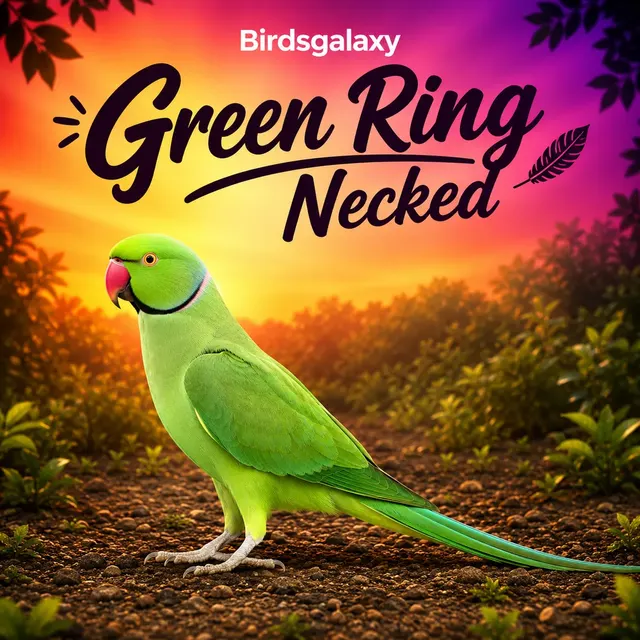
Indian Ringnecks are slim, long-tailed parakeets. Mature males grow a black and rose-pink ring around the neck, which gives the bird its name. They are very intelligent, can learn many words and tricks, and need daily handling and training to stay tame.
Many young ringnecks go through a "bluffing" stage, usually somewhere between about 4 months and 1 year old, when they may bite and seem to forget their training. It passes. Stay calm, keep sessions short and positive, and don't give up on the bird.
Cage and setup
Ringnecks need space for their long tail and strong wings: at least about 90 cm long for one bird, taller than it is narrow, with sturdy bars about 1.5 – 2 cm apart. They chew hard, so choose a strong metal cage and plenty of wooden toys.
- Perches placed so the tail hangs freely without touching the floor or bars.
- Puzzle and foraging toys to keep the clever mind busy.
- At least a few hours out of the cage daily, under supervision.
What Indian Ringnecks eat
Feed a good parrot pellet or parakeet mix as the base, plus plenty of fresh vegetables, greens and some fruit every day: carrot, peppers, broccoli, peas, corn, leafy greens, pomegranate, apple (no pips) and berries. Cooked pulses and sprouted seeds are healthy extras.
Never give avocado, chocolate, caffeine (tea, coffee, cola), alcohol, salty or fried food, onion or garlic. Fruit seeds and pits (apple pips, cherry and peach stones) should be removed. Fumes from non-stick (PTFE / Teflon) pans and aerosol sprays can kill a bird in minutes, so keep birds well away from the kitchen.
Daily care and health
Fresh food and water daily, regular cage cleaning, and baths or showers (most ringnecks love them). Train with treats a little every day; it keeps them tame and stops boredom, which can lead to screaming or feather plucking.
Birds hide illness until they are quite unwell, so small changes matter. See an avian vet (a vet who treats birds) quickly if your bird:
- sits fluffed up for long periods, or sleeps much more than usual,
- stops eating, or loses weight (a kitchen scale in grams helps you notice),
- has a bobbing tail when breathing, clicks or wheezes,
- has droppings that change colour or become very watery for more than a day,
- has discharge from the eyes or nostrils, or sits on the cage floor.
Male or female?
Only adult males grow the dark neck ring, usually between about 18 months and 3 years old. Before that, males and females look alike, so a DNA test is the only sure way to sex a young ringneck. Some mutations (such as Lutino) show the ring faintly.
Breeding Indian Ringnecks
Ringnecks are usually ready to breed at about 2 – 3 years old. Give the pair a deep nest box (about 25 × 25 × 45 cm) with wood shavings. In many climates they breed in the cooler months.
- A hen usually lays 3 – 5 eggs.
- Eggs hatch after about 23 days.
- Chicks leave the nest at around 7 weeks and are independent a few weeks later.
Record pairs, clutches and pedigrees in the free Birds Galaxy app.
Colours and genetics
Ringnecks are bred in many colours: Blue, Turquoise, Grey, Violet, Lutino, Albino, Cinnamon, Lacewing, Opaline, Pied, Clearhead and more, some of them sex-linked.
The Birds Galaxy app has an Indian Ringneck genetic calculator with results for sons and daughters.
Buying and the law
Indian Ringnecks are not covered by CITES, but some countries and regions control keeping or releasing them because escaped birds form wild colonies. Check your local rules, buy captive-bred birds only, and never release a pet bird.
Track your birds, clutches and pedigrees, ask the Bird Care Assistant, and work out chick colours, all in the free Birds Galaxy app.
Get the appFrequently asked questions
Do Indian Ringnecks talk?
Yes. They are among the best talkers of their size and often learn many words and phrases, especially with daily practice.
Why has my ringneck started biting?
Young ringnecks often go through a bluffing stage, roughly between 4 months and a year old. Keep training calm and positive and it usually passes.
When do males get the neck ring?
Usually between about 18 months and 3 years old. Females never get the full ring.
How long do Indian Ringnecks live?
Often 20 to 30 years, so plan for a long life together.
This guide is general information, not veterinary advice. If your bird seems unwell, contact an avian vet.
More care guides